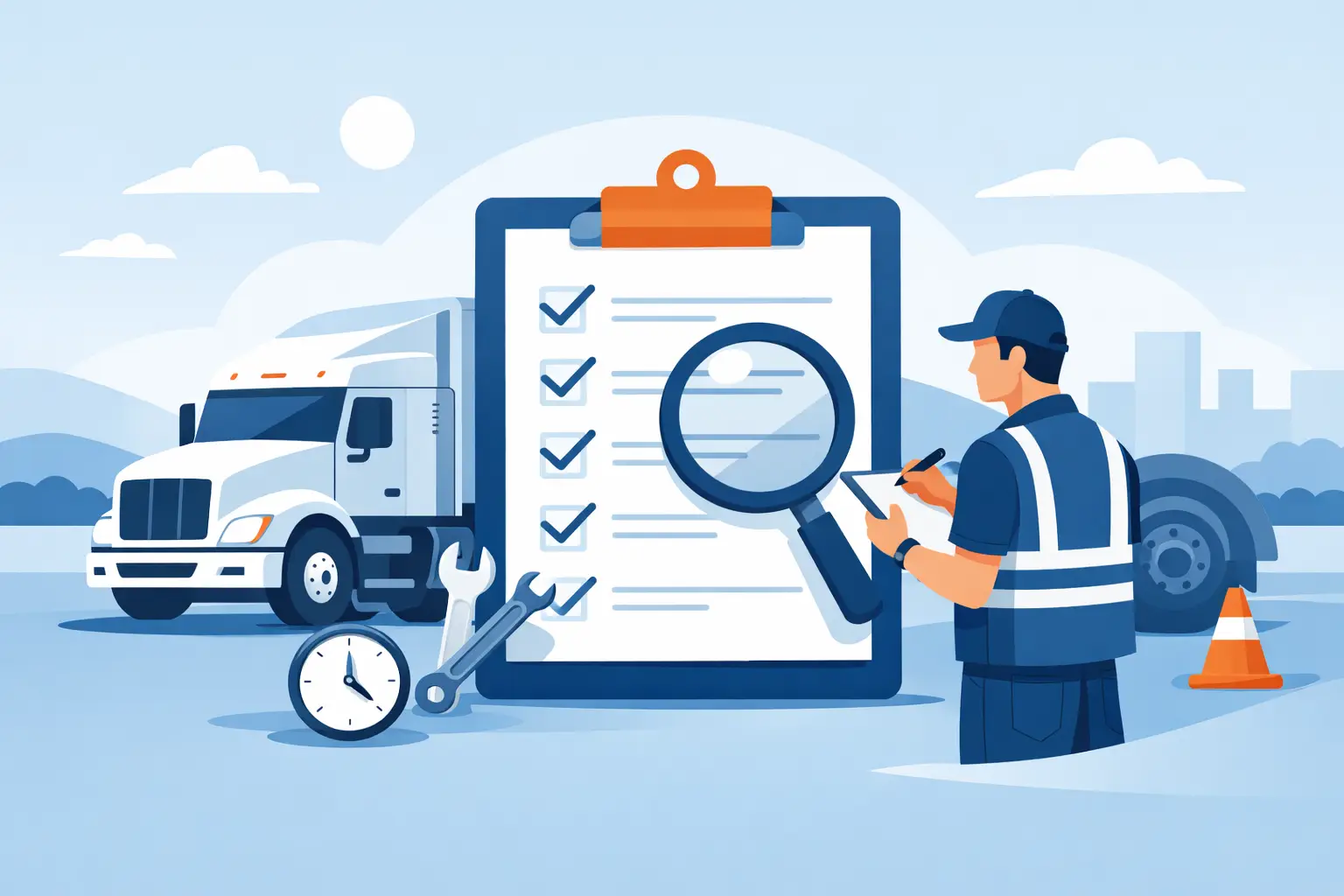
A truck can be road-ready in the shop and still fail a compliance review on paper. That is why DOT annual inspection requirements matter. If the inspection is not completed correctly, documented properly, and performed by a qualified inspector, the vehicle and the carrier can face preventable violations.
For drivers, owner-operators, mechanics, and fleet safety teams, the annual inspection is not just another maintenance task. It is a federal compliance requirement tied directly to vehicle condition, inspector qualifications, and recordkeeping. Getting it right helps reduce roadside issues, supports audit readiness, and keeps equipment legal to operate.
What DOT annual inspection requirements actually mean
Under FMCSA rules, every commercial motor vehicle subject to the Federal Motor Carrier Safety Regulations must pass an inspection at least once every 12 months. The inspection must cover, at a minimum, the parts and accessories listed in Appendix A to Part 396.
In practical terms, that means the vehicle needs a documented annual inspection that confirms it meets minimum safety standards. This is separate from pre-trip inspections, post-trip reports, and routine maintenance. A truck can receive regular service all year and still be out of compliance if the required annual inspection was missed or performed by someone who does not meet qualification standards.
The annual inspection applies to each vehicle in a combination. For a tractor pulling a semitrailer and a full trailer, the tractor, the semitrailer, the full trailer and the converter dolly (if used) must each be inspected (49 CFR 396.17(a)). If your operation includes multiple vehicle types or mixed-use equipment, the exact compliance picture can depend on how the vehicle is used, where it operates, and whether federal or state inspection programs apply.
Which vehicles need a DOT annual inspection
Most commercial motor vehicles operating in interstate commerce need this inspection. That usually includes trucks, truck tractors, buses, and trailers meeting the federal definition of a CMV. Fleets that operate across state lines should assume the requirement applies unless a specific exemption is clear and documented.
Intrastate operators can run into a different scenario. Some states adopt the federal annual inspection requirement directly, while others use a state inspection program that may satisfy the federal standard. That is where many businesses get tripped up. They assume a local or periodic state inspection automatically checks every FMCSA box. Sometimes it does. Sometimes it does not.
If you manage a fleet in more than one state, consistency matters. A standardized process built around federal requirements is usually the safer path than trying to interpret each unit differently unless you have a strong compliance team handling those details.
What the inspection must cover
DOT annual inspection requirements are built around vehicle safety systems, not a quick walk-around. Appendix A identifies the items that must be evaluated. That includes the brake system, steering components, suspension, tires, wheels and rims, lighting devices, safe loading features, coupling devices, exhaust system, fuel system, windshield wipers, and other key components affecting safe operation.
The standard is not whether the vehicle looks acceptable from ten feet away. The question is whether those parts meet minimum regulatory condition standards. If defects are found, they must be repaired before the vehicle is returned to service.
The full Appendix A list has 15 groups: brake system, coupling devices, exhaust system, fuel system, lighting devices, safe loading, steering mechanism, suspension, frame, tires, wheels and rims, windshield glazing, windshield wipers, motorcoach seats, and rear impact guard.
This is one reason qualified inspections matter. A proper annual inspection is not just a signature on a form. It is a technical review of regulated vehicle components against established criteria. When fleets treat the process like a paperwork exercise, that is when bad inspections and bad records start creating exposure.
Who is qualified to perform the inspection
This is one of the most important parts of compliance. Not just anyone in the shop can complete a federally compliant annual inspection. The inspector must be qualified under 49 CFR 396.19.
Under 49 CFR 396.19, the inspector must understand the inspection criteria in Part 393 and Appendix A to Part 396, be able to identify defective components, and know the methods, procedures, tools and equipment used in an inspection. The inspector must also be capable of performing the inspection in one of two ways:
- Successfully completing a Federal- or State-sponsored training program, or holding a certificate from a State or Canadian Province that qualifies the person to perform commercial motor vehicle safety inspections; or
- Having a combination of training or experience totaling at least one year, such as a manufacturer-sponsored or similar commercial training program, or work as a mechanic or inspector in a motor carrier maintenance program, a commercial garage or fleet leasing company, or for a State, Provincial or Federal government.
For many companies, this is where formal annual inspection training makes sense. It creates a clearer path to qualification, gives the inspector structured instruction based on the FMCSRs, and supports recordkeeping if the qualification is ever questioned during an audit, investigation, or roadside review.
Experience can count toward the one-year total, but it needs to be real, relevant, and supportable. A general maintenance background is not always enough if it cannot be tied directly to commercial motor vehicle inspection knowledge. Fleets should be careful about assuming a technician is automatically qualified because they have worked on trucks for years.
What documentation is required
An annual inspection is only as strong as its paperwork. After the vehicle passes, the motor carrier needs proof that the inspection was completed and that the inspector was qualified.
Proof of the inspection must be on the vehicle (49 CFR 396.17(c)). It can be the inspection report itself, or a sticker or decal based on the report that shows the date of inspection, the name and address of the motor carrier or other business where the report is kept, information identifying the vehicle (if it is not clearly marked on the vehicle), and a certification that the vehicle passed an inspection under 49 CFR 396.17.
The inspection report must identify the inspector, the motor carrier, the date, the vehicle, and the components inspected with the results, including any that did not meet Appendix A, and it must certify that the inspection is accurate and complete (49 CFR 396.21(a)). Keep the original or a copy for 14 months from the date of the report, where the vehicle is housed or maintained, and have it available when an authorized Federal, State or local official asks for it (49 CFR 396.21(b)).
The motor carrier must also keep evidence of the inspector’s qualifications. That record should show the basis for qualification, whether through training, experience, or both. Keep it for as long as the person performs annual inspections for you, and for one year after that. Inspector records are not required for inspections done under a State periodic inspection program (49 CFR 396.19(b)). For fleets, this is a core compliance file item, not an optional extra.
Good recordkeeping also helps with scheduling. When annual inspections are tracked correctly, it is easier to prevent expired inspections, coordinate repairs, and keep units in service without last-minute disruptions.
How the annual inspection differs from other inspections
A common point of confusion is the difference between the annual inspection and other required inspections. Drivers still need to perform pre-trip inspections. They still need to note defects in driver vehicle inspection reports when required. Maintenance teams still need to repair issues affecting safe operation. None of that replaces the annual inspection.
The annual inspection is a periodic, comprehensive compliance inspection. Pre-trips are operational checks done by the driver before a run. Routine maintenance is based on service intervals and equipment condition. Roadside inspections are enforcement actions conducted by officials. Each serves a different purpose. A roadside inspection, including a CVSA Level I or Level V inspection, does not count as the annual inspection; FMCSA ended that option in 2016 (81 FR 47732).
There is some overlap, of course. A strong maintenance program can make annual inspections easier because the vehicle is already being serviced consistently. But the annual inspection remains its own requirement with its own documentation and qualification standards.
Common mistakes fleets and owner-operators make
The biggest mistake is letting the inspection lapse. Once the 12-month window closes, the vehicle is exposed to violations if it continues operating. This is usually a process failure, not a technical one.
Another common problem is using an inspector without maintaining proof of qualification. The inspection may have been done correctly, but if the carrier cannot support the inspector’s credentials, that creates unnecessary risk.
Some fleets also rely on inconsistent forms or incomplete inspection reports. Others assume a state inspection or shop invoice is enough without verifying that it meets FMCSA annual inspection standards. And some owner-operators simply do not realize that the annual inspection is separate from general maintenance service.
The trade-off is usually speed versus control. Outsourcing inspections can save time, but only if the provider understands federal requirements and gives you complete documentation. Handling inspections in-house can improve consistency, but only if your inspectors are properly trained and your records are organized.
Building a compliant annual inspection process
For a single truck, this can be straightforward. Schedule the inspection early, correct any defects, keep the documentation on file, and set reminders well ahead of the next due date.
For a fleet, the process needs more structure. Track due dates by unit, verify inspector qualifications, standardize forms, and build enough lead time to handle repairs without affecting operations. If you wait until the last week before expiration, you are counting on shop capacity and parts availability lining up perfectly. That is not a good compliance strategy.
Training is also part of the process. If your company performs annual inspections internally, your inspectors need a clear, regulation-based understanding of what must be checked and how qualification works. DOT Safety Class provides online annual inspection training designed for working transportation professionals who want structured training that supports annual inspector qualification. Under 49 CFR 396.19, the motor carrier decides whether an inspector is qualified and keeps the evidence.
Why training matters for DOT annual inspection requirements
DOT annual inspection requirements are straightforward on paper, but execution is where problems show up. A missed component, a weak inspection report, or a qualification gap can turn a routine requirement into a violation.
Training helps close those gaps. It gives inspectors a more consistent understanding of the Part 393 and Appendix A standards, reinforces the documentation side of compliance, and helps fleets create a repeatable process instead of relying on assumptions. That matters whether you are an independent mechanic building your qualifications or a safety manager trying to standardize inspections across multiple locations.
The goal is simple: keep vehicles compliant, keep records clean, and keep operations moving without preventable setbacks. When your inspection program is built correctly, the annual requirement becomes manageable instead of disruptive.
If your inspections are coming due soon, now is the right time to verify who is qualified, what records you have on file, and whether your process would hold up under scrutiny.