
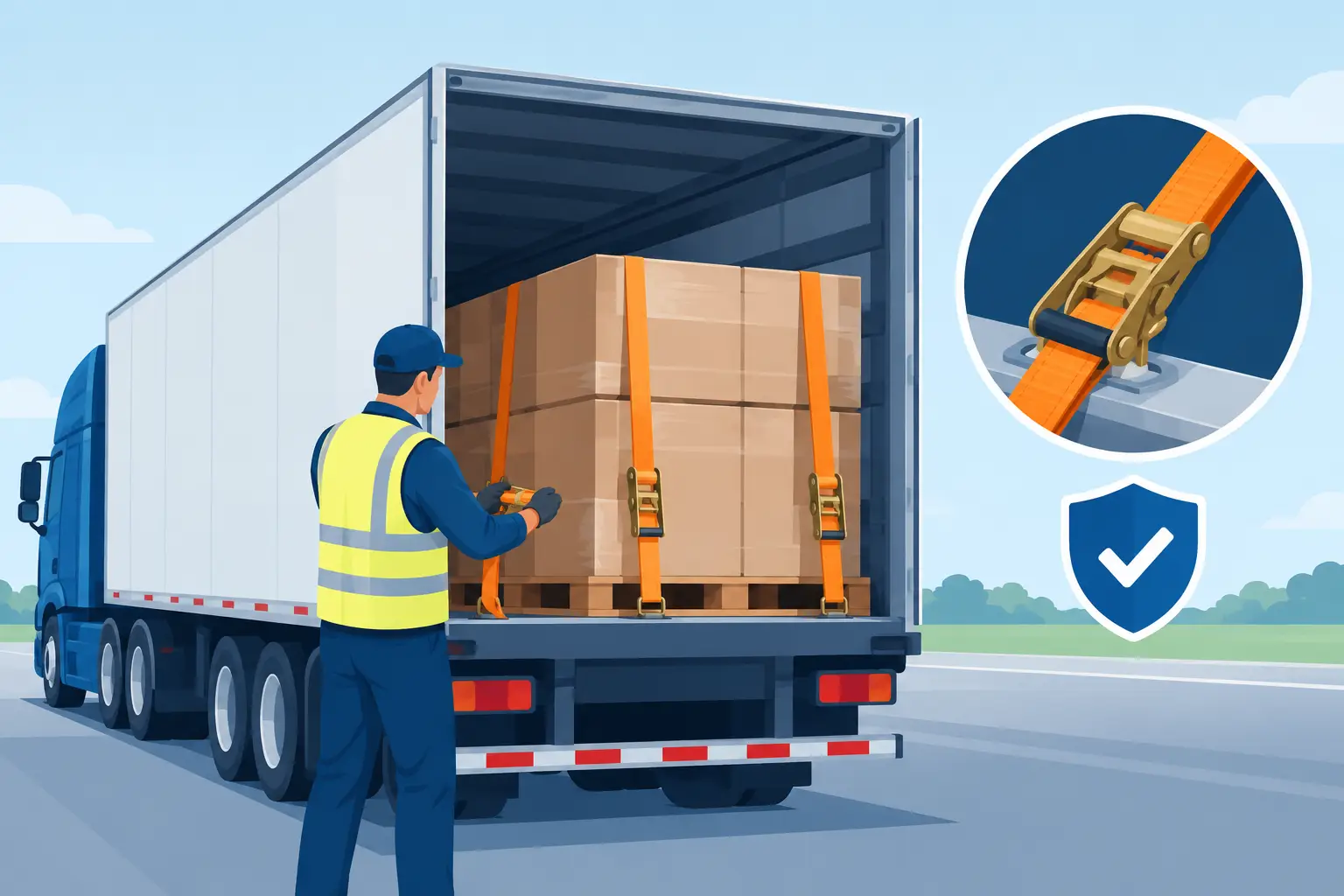
A loose strap, a shifted pallet, or a damaged binder can turn a legal load into an out-of-service risk before the next scale house. So, when must cargo be resecured? Under FMCSA rules, a driver must correct a load whenever an inspection shows the cargo or its securement devices are no longer properly secured. The required inspection intervals are the minimum standard, not permission to keep driving with a known problem.
For drivers and fleets, this is a daily compliance obligation under 49 CFR 392.9 and the cargo securement standards in 49 CFR Part 393. Knowing the timing matters. Knowing what requires immediate action matters even more.
When Must Cargo Be Resecured Under FMCSA Rules?
A driver must resecure cargo when an inspection reveals that the cargo has shifted, the load is not properly distributed, a tie-down has loosened, or a securement device is damaged, defective, or otherwise no longer effective. The driver must make the necessary adjustment before continuing to operate the commercial motor vehicle.
The rule does not require drivers to wait for a scheduled recheck if they see or suspect a problem. A strap flapping in the mirror, a chain that has lost tension, a tarp that has come loose, or freight that has moved against a trailer wall all require attention as soon as the vehicle can be safely stopped.
Cargo must remain properly distributed and adequately secured throughout the trip. This includes the cargo itself and the equipment used to restrain it, such as tiedowns, chains, straps, binders, blocking, bracing, dunnage, headboards, and cargo bars. A device may have been adequate at departure but become inadequate after road vibration, braking, cornering, weather exposure, or cargo settling.
The Required Cargo Inspection Schedule
Section 392.9 requires the driver to inspect the cargo and load securement devices within the first 50 miles after beginning a trip. If that inspection finds a problem, the cargo must be adjusted or resecured before the vehicle continues.
After the initial 50-mile inspection, the driver must reexamine the cargo and securement devices whenever any of these occurs, whichever comes first:
- The driver changes duty status.
- The vehicle has been driven for 3 hours.
- The vehicle has traveled 150 miles.
These checks are not optional maintenance stops. They are required cargo securement inspections. A driver should use the inspection to look for shifting, movement, loss of tension, wear, broken components, and changes in the load’s position or stability.
For example, a flatbed driver hauling bundled steel may inspect at 50 miles and find that the cargo has settled enough to reduce chain tension. The chains must be tightened before travel resumes. A dry van driver may stop after three hours and find a cargo bar has fallen or freight has leaned into an aisle. That load must be stabilized before the truck returns to the road.
A Recheck Is Not Always a Reseccurement Event
A required inspection does not automatically mean cargo must be resecured. If the freight remains stable, tiedowns remain tight, and all devices are in serviceable condition, the driver can document or complete the check according to company procedure and continue operating.
Resecurement becomes necessary when the inspection identifies a condition that affects compliance or safe transport. The difference is simple: a recheck is the inspection; resecuring is the corrective action required when the inspection finds a deficiency.
Drivers should avoid treating the inspection schedule as a paperwork exercise. A vehicle can pass a scheduled interval with no issue, while a sudden hard brake, rough construction zone, sharp turn, or severe weather event creates an immediate reason to stop and inspect. The FMCSA intervals establish a baseline. Safe operation may require more frequent checks based on the cargo, equipment, route, and conditions.
Conditions That Require Immediate Correction
A load should be resecured before the truck moves if cargo has shifted enough to change weight distribution, create instability, contact a trailer door, reduce visibility, or affect axle weights. Freight does not need to fall from the vehicle before it becomes a violation.
Tiedowns must also be addressed if they are loose, cut, frayed, broken, improperly routed, or no longer protected from abrasion. Edge protection is especially critical where a strap contacts a sharp edge. A strap that is technically present but being cut by cargo is not reliable securement.
The same principle applies to blocking and bracing. Damaged lumber, crushed dunnage, dislodged chocks, broken cargo bars, or failed load locks can allow movement even if exterior doors remain closed. Inside a van or box trailer, open the trailer carefully. Shifted freight can be pressing against the doors and may fall when they are released.
Specialized loads require the same attention to their commodity-specific securement requirements. Logs, heavy vehicles, machinery, coils, concrete pipe, and other regulated commodities may require specific tiedown arrangements, blocking methods, or containment systems. Meeting the general inspection timing does not replace the applicable rules for that cargo type.
What Drivers Should Do When a Problem Is Found
First, stop in a safe location. Do not attempt to tighten straps, replace chains, or open trailer doors on an unsafe shoulder, active ramp, or location where passing traffic creates a hazard. Use required warning devices and follow company procedures for roadside work.
Next, assess the full load condition rather than fixing only the most visible issue. A loose tie-down may be the result of cargo settling, broken blocking, improper placement, or a larger load shift. Check the working load limit and condition of replacement equipment before using it. Adding another strap does not correct a load if the cargo is unstable, improperly positioned, or over the capacity of the securement system.
Then resecure the cargo using the correct method for the commodity and trailer. Recheck tension, anchor points, edge protection, blocking, and cargo movement. If the load cannot be safely corrected at the roadside, contact dispatch or the shipper and move the vehicle only as necessary to reach a safe repair or transfer location under company direction.
A driver should never continue because the delivery appointment is tight. A cargo securement violation can lead to roadside penalties, an out-of-service order, cargo loss, crash exposure, and preventable claims. The operational delay from correcting a load is usually far smaller than the cost of a failed roadside inspection or incident.
Driver Responsibility Starts Before the Truck Moves
The driver must be satisfied that cargo is properly distributed and adequately secured before operating the vehicle. That responsibility exists even when another employee, a shipper, warehouse team, or loading crew placed the freight on the trailer.
This does not mean drivers must perform work that is unsafe, prohibited by a customer site, or impossible due to sealed cargo. There are limited situations in which a driver may not be able to inspect certain cargo during transit, such as a sealed trailer that the driver has been ordered not to open. However, fleet policy, shipper instructions, and operational limitations do not erase the duty to ensure the load is safe before departure or to respond appropriately when a securement issue is known.
For fleet managers, consistent training is the control point. Drivers need to recognize when a normal load check becomes a mandatory resecuring event, understand working load limits, and know when to remove equipment from service. Supervisors should also establish clear procedures for documenting inspections, reporting load issues, and obtaining roadside support.
Build Cargo Checks Into the Trip Plan
The best cargo inspections happen at planned, safe stopping points rather than as an afterthought. Drivers can plan the first 50-mile check around a safe parking area, then align later checks with fuel stops, breaks, and duty-status changes. That approach supports compliance without creating rushed roadside decisions.
Frequent inspections may be necessary for loads prone to settling or movement, including newly loaded machinery, stacked building materials, secured pipe, or mixed freight. Rain, snow, high winds, steep grades, and rough roads can also justify additional stops. More checks take time, but they give drivers the chance to correct small issues before they become violations or hazards.
Cargo securement is not finished when the last binder is tightened or the trailer doors close. It is an active driver responsibility for the entire trip. Train to the FMCSR standard, inspect at every required interval, and resecure immediately whenever the load or equipment no longer meets the rule. DOT Safety Class cargo securement training helps drivers and fleets build that discipline, document completion, and stay ready for the next inspection.
0 responses on "When Must Cargo Be Resecured? DOT Rules"